Why Cats Have Super Hearing.
Cat Curiosities...

Cat Curiosities...
• Posted Oct 10 • 2024.
We know that cats are beautiful, perfect, soft, and that they purr. But did you know that cats have one of the sharpest senses of hearing in nature? That’s right—cats have an incredible ability to hear. But how does it work, and how do they use it in their daily lives? Let’s find out.
Let’s start with this: while humans and most dogs have a limited range of hearing in comparison, cats have an exceptionally sharp sense of hearing. Remember, cats are natural-born hunters, so being able to not only pick up sounds from further away but also detect much higher frequencies gives them a significant advantage, both in their role as hunters and in their daily lives. Tell me I’m wrong—cats can hear you open a can, even if they’re far away!
We humans can hear sounds in a frequency range of about 20 Hz to 20 kHz (20,000 Hz). But in comparison, our beloved cats can detect frequencies ranging from 48 Hz to 64 kHz (64,000 Hz). This much wider range not only surpasses humans but also outshines dogs, whose upper limit is around 45 kHz. This expansive hearing range allows cats to perceive sounds we simply cannot, like a mouse squeaking or an insect moving through the grass—or, as I mentioned earlier, the sound of a can of food being opened from many feet away. In fact, they can hear sounds over 65 feet from their source.
Although most cats today are domestic animals, their hunting instinct remains strong. Their ability to detect high frequencies helps them keep our homes free from rodents like mice and rats. These small animals produce high-frequency sounds that we can’t hear, but our cats can easily detect and locate, even if the sounds are coming from dense vegetation, underground, or in complete darkness.
And as if that weren’t enough, their hearing can pick up even the slightest, most imperceptible movements of their prey, allowing them to anticipate these movements and strike with incredible precision. Anyone who’s ever watched a cat hunt a mouse can attest to the speed of their movements and the accuracy of their attacks. This is, of course, due to their agility and speed, but it’s also thanks to their acute sense of hearing. Incredible, right?
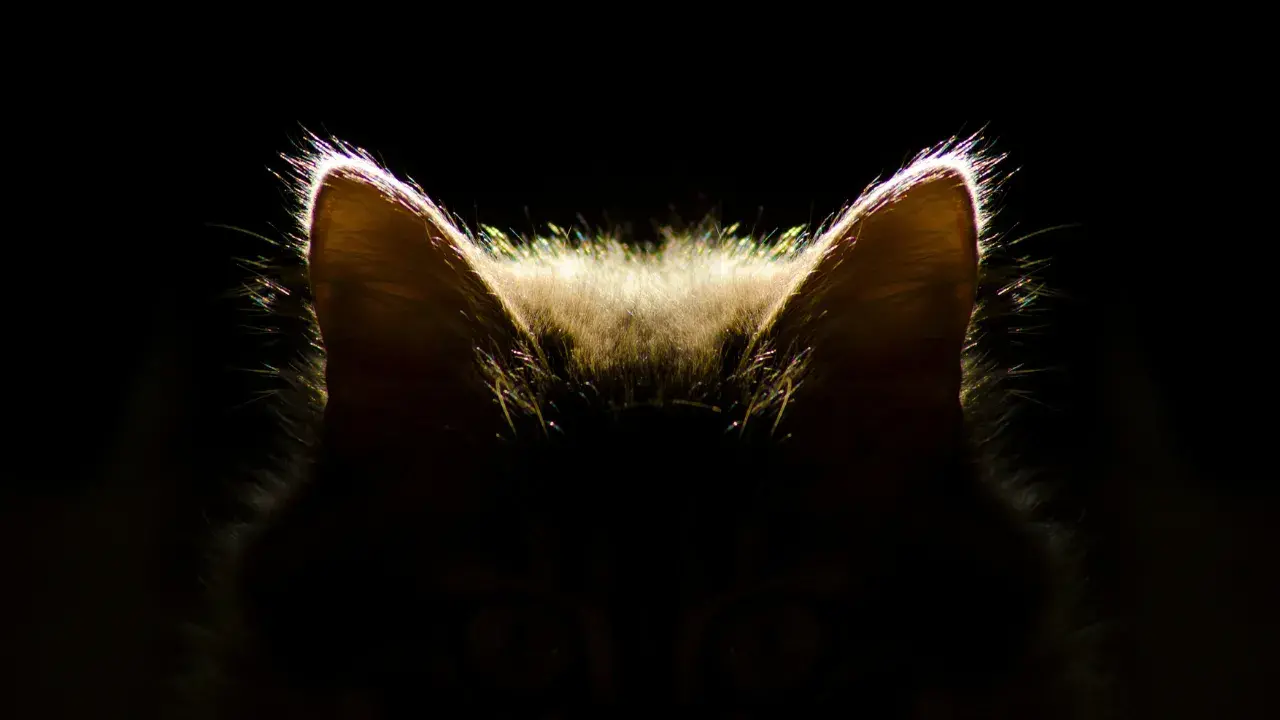
We’ve all seen a cat’s impressive ability to pinpoint the source of a sound with incredible accuracy. And there’s a reason for this: their 3D hearing, which allows them to locate the exact origin of a noise in less than a tenth of a second. This is thanks to one of their most charming traits—the movement of their ears, which you’ve surely noticed many times. The structure of their ears allows them to move independently in a 180-degree radius, orienting like antennas toward the source of the sound, confirming its location, all while looking adorable. This ability lets them filter out irrelevant noises, even in noisy environments, and focus on the sounds that matter, like mice, insects, or cans of tuna.
A cat’s acute hearing not only enhances their hunting abilities but also helps them communicate with each other. It’s quite interesting and curious because cats emit and respond to high-frequency sounds to communicate with other cats. Many of these sounds are beyond our hearing range, meaning cats are likely communicating in ways we can’t perceive. Of course, they also use soft meows and irritated yowls to communicate, which we do hear, but the truly fascinating part is what we don’t hear. What could they be saying to each other?
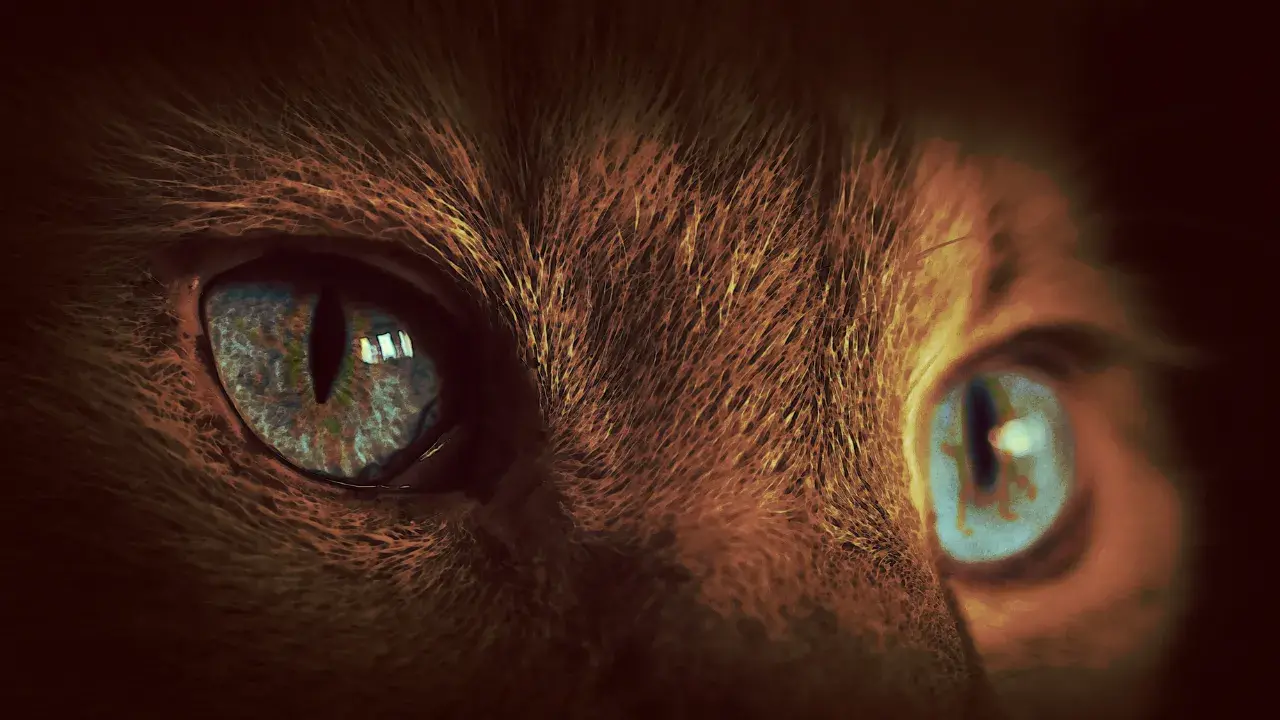
It’s well-known that cats have excellent night vision, but imagine that combined with their superb hearing. This gives them a huge advantage as hunters, allowing them to move confidently and hunt by detecting sounds and movements in complete darkness or low-visibility conditions. They are undoubtedly exceptional predators, designed with all the tools to excel at what they do best.
Since cats can pick up such high frequencies, which makes them extremely sensitive to sounds, it’s no surprise that they hate loud noises. When they hear a very loud noise they aren’t used to, it can cause them a lot of discomfort—basically because they hear it so well. What may be just an annoying noise to us can be deeply disturbing for them. That’s why they sometimes run and seek shelter when they hear unexpected loud sounds. This is also why it’s recommended not to use loud bells on their collars, as it can hurt their ears!
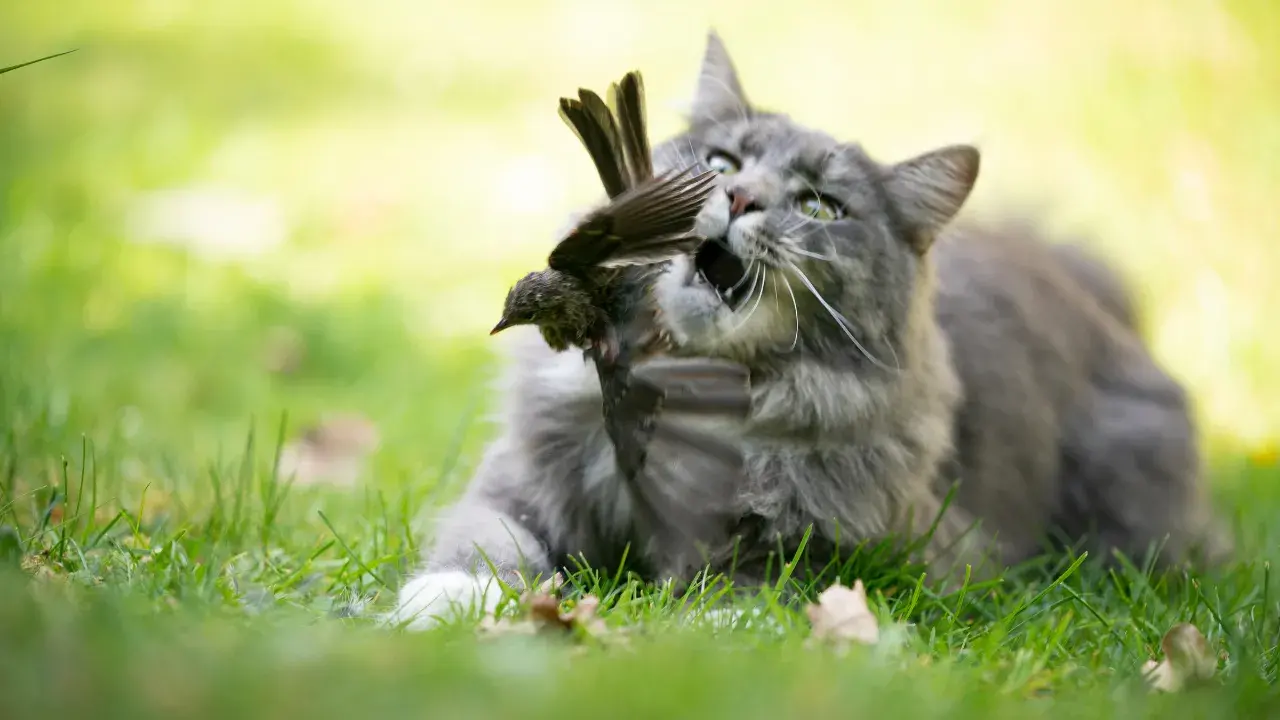
In conclusion, cats are equipped with all the tools that make them the ultimate predators in nature. This is one of the reasons why it’s important not to let them roam outside, as their instincts are still strong, and if they go out, they can wipe out not only mice and rats but also birds and other small animals. Their sharp hearing helps them be the hunters they are, but it’s best if they use those instincts to keep our homes rodent-free, don’t you think?
Because I Love My Cats.